

Why Older Homes in Toronto Often Have Indoor Air Quality Concerns
Posted in Air Quality, on July 24, 2026
During air quality testing in Toronto, SafeAir consistently finds a higher likelihood of air quality issues due to aging or unique construction materials, features, or systems. Identifying these concerns and having the knowledge that allows you to make healthy, safe changes is therefore the primary benefit of indoor air quality testing in Toronto. If you live in an older home, environmental testing in Toronto can help you identify what unique risks your property may have, allowing you to take the necessary steps to prevent and eliminate issues that affect your health and comfort. SafeAir is one of the GTA’s leading providers of home air quality testing — here’s what over fifteen years of service has shown us.
Aging Building Materials and Ventilation Systems
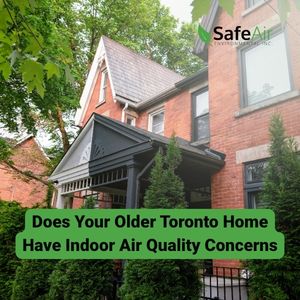 Building codes and habits change over time, and many of the homes built in Toronto and the GTA throughout the 50s and 60s housing boom were made to different specifications and understandings of airtightness and ventilation standards. In the thousands of older properties we’ve assessed, and the hours we’ve spent on site, we’ve encountered hundreds of homes where ventilation is inefficient, leading to poor air quality and stagnant circulation.
Adding to this effect are aging building materials, which can release toxic dust or debris, like asbestos. Detecting these particles through environmental testing in Toronto can help you make safe choices around renovation and remediation.
Moisture Issues and Hidden Mold Growth
Another common problem with older homes is that plumbing, roofing, and insulation systems are more likely to develop leaks that introduce excess moisture and lead to mold growth. Moist conditions in areas like the basement, crawlspace, attic, or wall cavities can spark mold growth within 48 hours, and hidden infestations are one of the most common causes of poor indoor air quality. Moisture and humidity build-up are one key element of environmental testing in Toronto, and can tell us a lot about your home and its risk of mold growth.
Outdated Heating and Filtration Systems
Older furnaces, air conditioners, or ducting can also promote poor air quality. These outdated technologies lack the modern filtration that helps sift out allergens and particulates that cause respiratory issues. During home air quality testing, SafeAir always pays attention to these systems to help identify when and where they may be influencing our results. For example, inconsistent heating or airflow can cause humidity imbalances that promote mold growth. Paying attention to these little things helps our team more accurately diagnose and treat any air quality issues that testing identifies.
Improving Air Quality in Older Homes
Air quality issues from aging infrastructure, moisture, or outdated HVAC systems can build up slowly, which makes them harder to detect with your senses. Booking indoor air quality testing in Toronto with SafeAir is straightforward and can help you identify problems earlier and improve your overall home comfort and safety. Living in an older home does not mean you have to live with strange odours, poor air circulation or other issues — there are many solutions for every budget. To learn more about how we can help and about your home environment, contact the SafeAir team.