

How Wildfire Smoke Affects Indoor Air Quality
Posted in Air Quality, on August 25, 2026
In recent years, wildfire smoke has reached Toronto more frequently, prompting air quality warnings and recommendations that people stay indoors. However, staying inside doesn’t always guarantee limited exposure. Office and home air quality can be affected when fine particles enter through gaps, vents, doors, windows, or HVAC systems.
At SafeAir, we can help you assess whether particles are entering your building through home or office indoor air quality testing. Homeowners and business managers in the GTA can assess whether their buildings provide a safe indoor environment through air quality testing and specialized services like mold inspection in Toronto. Here’s what you should consider when preparing for future wildfire smoke seasons.
Why Indoor Spaces Aren’t Automatically Protected from Wildfire Smoke
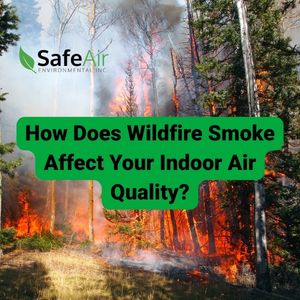 To understand how smoke gets indoors, you first need to consider what it contains. Smoke is a mixture of water vapour and pollutants such as carbon monoxide, nitrogen oxides, polycyclic aromatic hydrocarbons, and particulate matter.
Particulate matter has been studied for decades because of its effects on human health. These particles can be large enough to see with the naked eye, like soot, or so small that they can only be seen under a microscope.
Learn more about the composition of wildfire smoke from the United States Environmental Protection Agency.
How Smoke Particles Enter Buildings Despite Closed Windows
Because smoke particles can be extremely small, they may enter your home through minute cracks and gaps in the building envelope. They can also enter through HVAC systems and vents or whenever windows and doors are opened.
The smaller the particles are, the more deeply they may enter the respiratory system. Keeping as much smoke outside your building as possible is therefore an important part of reducing exposure.
What Helps Reduce Wildfire Smoke Indoors
If you’re concerned about indoor air quality during wildfire smoke events, SafeAir recommends three key strategies:
- Filtration: Use a furnace filter with the highest filtration rating suitable for your system to capture as much particulate matter as possible. If you have a stand-alone HEPA air purifier, run it throughout the day.
- Sealing: During annual property maintenance, inspect seals around doors, windows, and other openings. Replace seals that are broken, damaged, or deteriorated.
- HVAC adjustments: In offices and commercial spaces, adjust the HVAC system to manage air mixing and ventilation properly while limiting unnecessary outdoor smoke infiltration.
Why Office Air Quality Testing Matters
Business owners are responsible for supporting the health and safety of staff and clients, including addressing air quality concerns on site. Office indoor air quality testing can help you understand the effects of wildfire smoke and identify other conditions affecting the building’s indoor environment.
Poor office air quality can also contribute to discomfort, reduced productivity, and increased absenteeism. The benefits of an air quality assessment can therefore extend well beyond periods of visible wildfire smoke.
When Smoke Concerns Overlap with Mold Inspection
Both particulate matter and mold growth can be affected by ventilation and moisture conditions. Wildfire smoke often becomes a concern during the summer, when warmer air can hold more moisture and indoor humidity may rise. Reduced ventilation intended to keep smoke outside may also allow indoor moisture and mold spores to remain trapped.
A mold inspection in Toronto can help identify areas of your home or office where airflow and humidity problems may contribute to mold growth and poor indoor air quality.
Reduce the Effects of Wildfire Smoke at Home and Work
The SafeAir team has over a decade of experience helping families and businesses investigate indoor air quality problems. Addressing the effects of wildfire smoke on home air quality requires a thorough environmental assessment of how airflow, filtration, and humidity interact throughout your building.
As wildfire smoke becomes a growing seasonal concern, our team can help you understand how particles enter your property and what improvements may reduce exposure. To learn more about air quality testing in Toronto for your home or business, contact SafeAir today.