

How Condensation and High Humidity Can Affect Indoor Air Quality
Posted in Air Quality, on June 05, 2026
Your home’s air quality is influenced by more than just dust or other microscopic airborne particles — let SafeAir’s indoor air quality testing tell you more! One of the most important elements we test for during environmental assessments and mold inspections in Toronto is humidity or evidence of condensation. Excess moisture indoors can cause adverse changes to home air quality, and by understanding the relationship between them, homeowners can identify potential concerns early and create a healthier, safer indoor environment. Contact our team to book your specialist air quality assessment today!
What Causes Condensation and High Indoor Humidity?
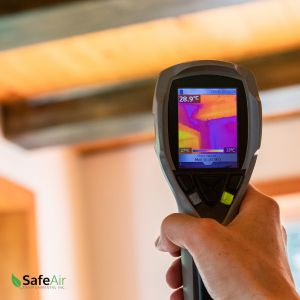 Humidity is simply moisture that has been evaporated. Everyday activities where water is heated, like showering, cooking, or laundry, can cause liquid water to enter the indoor air environment. Once airborne, this moisture can move around your home and may resettle on cooler surfaces, causing condensation. This is why many homeowners find a fine layer of condensation on windows or exterior walls during the winter — warm, moisture-laden air meets a cooler surface, forming droplets. Seasonal weather changes and temperature fluctuations can also increase the likelihood of this process occurring.
How Excess Moisture Impacts Indoor Air Quality
Poor ventilation and air movement inside your home can trap humidity and cause it to build up, creating a sticky-feeling, heavy atmosphere that can make daily activities less comfortable. But beyond these immediate effects, high humidity also has secondary effects on home air quality, such as increasing the risk of mold and mildew growth. Damp conditions create the ideal atmosphere for mold growth and often go hand-in-hand with musty odours and poor air quality. Some of the most common areas the SafeAir team discovers high indoor humidity or moisture problems are the basements, attic, bathroom, and kitchen.
How Air Quality Testing Helps Identify Moisture-Related Concerns
Indoor air quality testing is the premier method for identifying environmental issues (like poor airflow) and the problems they exacerbate (like mold growth). During an air quality test in Toronto, we look at the interior and exterior of your home to quantify elements like temperature, humidity, and airflow, while testing for particles, dust, spores, VOCs, and other air quality pollutants.
Our testing creates a complete picture of your indoor air environment and can help you assess where improvements are needed. For example: clients with damp basements may see no visible evidence of mold growth, while still harbouring hidden infestations behind walls or flooring. Testing can identify the warning signs or point to areas that need further investigation, letting you eliminate or get ahead of problems before they cause damage or negative health effects for you or your family.
Work with SafeAir For Cleaner, Healthier Air Quality At Home
Condensation and high humidity can have a noticeable effect on indoor air quality, making your home feel close, musty, and unclean, regardless of how hard you scrub! Moisture-related issues can develop gradually and may be hard to detect with the senses alone, which is where mold inspection in Toronto can help. The SafeAir team can help you better understand the complex factors creating mold issues, bad smells, or decreased air quality at home and help you breathe easier — literally and figuratively. To learn more about our indoor air quality testing or speak to one of our technicians about a problem in your home, contact our team via phone or email today.